For years, much of the discussion around soil carbon has centred on the question: “can management practices genuinely build soil carbon in Australian farming systems?”
One of the strongest messages emerging from the recent Soil Carbon Masterclass was that the conversation is evolving.
With more than 1,000 registrations, the virtual webinar was hosted in July 2026 to explore the latest science, research and practical insights on soil carbon.
Across presentations from leading researchers, government representatives and industry practitioners, there was growing confidence that soil carbon can be increased under the right conditions and with the right management. Increasingly, the debate is shifting away from whether soil carbon can be built and towards how it should be measured, monitored and credited over time.
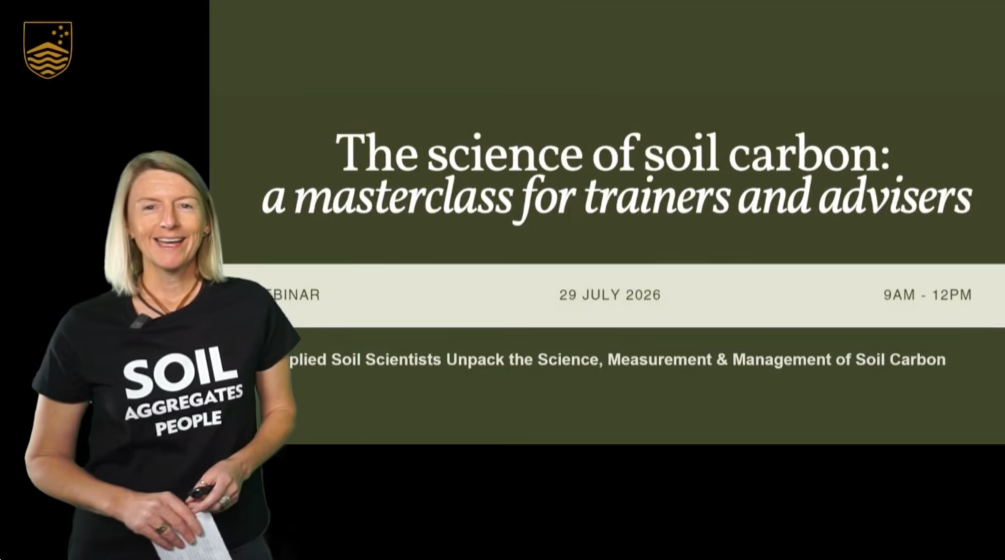
The Science of Soil Carbon: A Masterclass for Trainers and Advisers
Confidence in long-term sequestration is growing
One of the most significant themes from the Masterclass was the growing body of evidence supporting long-term soil carbon gains in grazing systems.
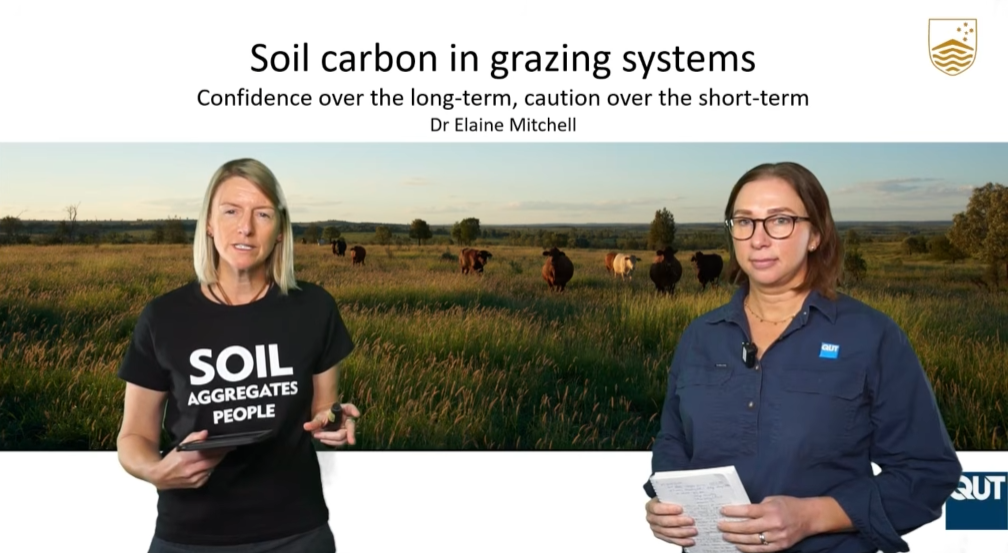
Dr Elaine Mitchell’s presentation, Soil Carbon in Grazing Systems: Confidence Over the Long Term, Caution Over the Short Term, examined emerging long-term paired-site research that is challenging some historical conclusions about grazing management and soil carbon.
Importantly, the presentation explored why many earlier studies failed to find consistent effects from grazing management. Common limitations had surrounded short research timeframes, shallow sampling depths, small experimental plots and difficulties separating management impacts from broader environmental influences such as rainfall, temperature and soil type.
However, newer research using carefully matched paired sites is helping address many of these limitations. Findings presented at the Masterclass showed significant differences in soil carbon levels associated with long-term management changes, including time-controlled grazing and the incorporation of legumes into grazing systems.
Perhaps most notably, the overarching message was one of confidence. The evidence presented suggested that with the right management, on the right soils, and over sufficient timeframes, building soil carbon in grazing systems is achievable.
Better research is producing better answers
Another strong theme throughout the day was the importance of research design.
Much of the discussion focused not simply on soil carbon outcomes, but on how those outcomes are measured. Researchers repeatedly highlighted the importance of long-term datasets, consistent methodologies, sufficient sampling intensity and accounting for natural variability within agricultural systems.
Presentations from CSIRO and QUT reinforced that soil carbon is inherently variable across landscapes and over time. Detecting genuine changes requires robust sampling frameworks capable of separating management impacts from seasonal and environmental fluctuations.
This emphasis on measurement quality is an encouraging development for the industry. As datasets become larger and research programs extend over decades rather than years, confidence in both sequestration estimates and project outcomes continues to grow.
The message was clear: better science is producing better answers, and those answers are improving our understanding of where, when and how carbon can be built in our soils.
What this means for project design
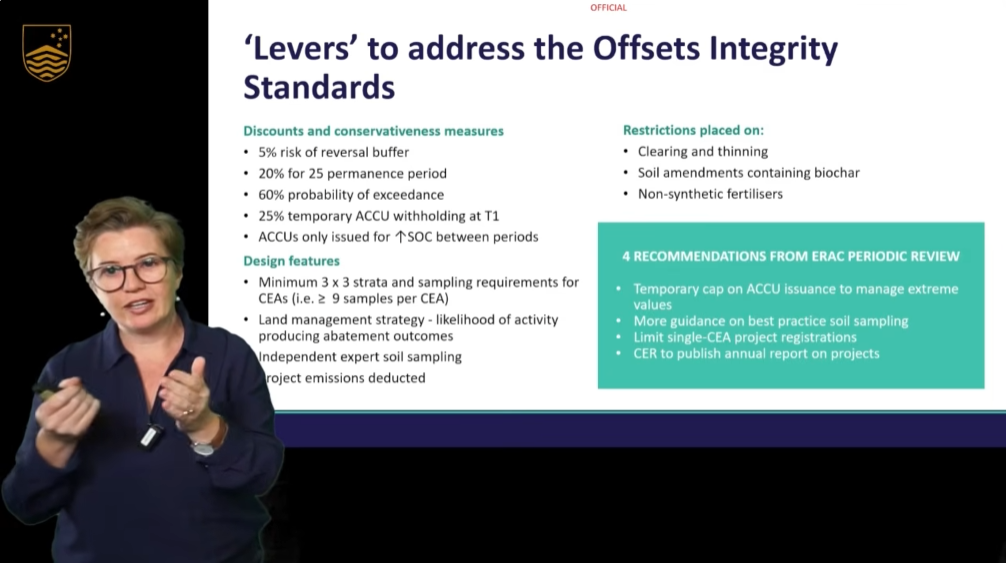
One of the more interesting observations from the Masterclass was how closely many of the discussions aligned with themes emerging from the ongoing Soil Carbon Method Review.
Across multiple presentations, researchers highlighted the importance of representative sampling, long-term monitoring, robust project design and accounting for natural soil carbon variability over time. These are many of the same issues currently being examined as part of the review process, with a shared objective of ensuring soil carbon projects continue to deliver credible and scientifically defensible outcomes.
Recommendations made around strengthening sampling and stratification protocols are aligned with CarbonLink’s existing approach to soil carbon measurement and analysis.
For CarbonLink, this was an encouraging signal. As the industry’s understanding of soil carbon continues to evolve, the conversation is increasingly focused on improving confidence in outcomes rather than questioning whether those outcomes are possible.
What the science agreed on
While the presenters approached soil carbon from different perspectives, there was remarkable consistency around the fundamental drivers of soil carbon accumulation.
Across grazing and cropping systems alike, speakers highlighted the importance of increasing carbon inputs through productive plant growth, maximising groundcover, supporting biological activity, improving nutrient cycling and maintaining resilient farming systems.
CSIRO research presented during the Masterclass reinforced that while climate and inherent soil characteristics remain important drivers of soil carbon at national scales, management practices become increasingly influential at the farm and paddock scale because they directly affect biomass production, organic matter inputs and retention in the soil and soil disturbance.
The practical implication for producers is significant. Building soil carbon is not about chasing a single practice or silver bullet solution. It is about improving the overall performance and resilience of the farming system.
That message aligns closely with what many producers have experienced firsthand: healthy, productive farming systems are generally the systems most capable of building and maintaining soil carbon over the long term.
The conversation about integrity
While confidence in long-term sequestration is increasing, the Masterclass also highlighted the importance of ensuring carbon outcomes are measured and credited appropriately.
Several presenters discussed the challenges associated with short-term measurement windows, natural variability in soil carbon and the potential for short-term fluctuations to influence results. These discussions featured prominently in conversations around the ongoing review of Australia’s Soil Carbon Method.
Importantly, these conversations were not framed as a challenge to soil carbon itself. Rather, they reflected an industry committed to improving accuracy, strengthening safeguards and ensuring long-term confidence in carbon outcomes.
That is a positive sign for the future of the sector.
Strong carbon markets depend on trust. Trust is built through robust science, transparent methodologies and a willingness to continuously improve as new evidence emerges.
Integrity starts before the first soil sample
A recurring theme was that project outcomes are heavily influenced by the quality of project design.
Speakers highlighted how factors such as sampling intensity, landscape variability, project stratification, monitoring frameworks and measurement timing can all influence the accuracy of reported soil carbon outcomes. Discussions reinforced an important principle: strong project integrity is built long before the first credit is ever generated.
This aligns closely with the direction of Australia’s Soil Carbon Method Review, which seeks to further strengthen confidence in soil carbon projects by reducing the risk of short-term variability being mistaken for long-term sequestration.
For CarbonLink, that focus on integrity is not new.
It reflects the importance of conservative project design, rigorous measurement approaches and setting realistic expectations around sequestration potential. As the science continues to mature, these safeguards will become increasingly important in maintaining trust across the entire industry.
Perhaps the most encouraging takeaway from the Soil Carbon Masterclass was the spirit of collaboration that underpinned the event.
Researchers, producers, regulators and industry representatives came together with a shared objective: improving our understanding of soil carbon and ensuring the science is translated into practical outcomes for Australian agriculture.
Our key takeaway: The conversation has changed
The discussion has come a long way in recent years. Increasingly, the conversation is no longer about whether soil carbon has a place in productive farming systems. It is about how we continue to improve the science, strengthen integrity and create opportunities for producers to be recognised for the positive outcomes they are achieving on-farm.
For CarbonLink, we’re encouraged by the growing convergence between research, policy and practical farming experience. We believe it provides a strong foundation for the continued growth of a credible, science-based soil carbon industry that delivers value for both producers and our landscapes.