Keep up to date with CarbonLink news, industry insights and producer stories.
Carbon Farming makes sense for you, your farm and your future
Carbon farming provides various short and long-term benefits that will deliver a clean, profitable future for farmers, communities and the environment.
Who’s eligible for Carbon Farming?
Every property is different, so there’s no one-size-fits-all checklist. When we assess whether a soil carbon project could suit your land, we look at:
Where your property is located and its landscape
Soil types and ecological factors
Average annual rainfall
Your farming operation and current management approach
What you want to achieve for your business
You don’t need to be running particular practices already. If a project looks viable, our team works with you to find practice changes that make sense for your farming system.
The best way to find out is to talk to us. Our Carbon Farming Advisors offer free, no-obligation on-farm consultations to walk through your property and whether a soil carbon project is the right fit.
The Benefits of Carbon Farming
Land Productivity
By improving soil fertility, enhancing water retention, and promoting sustainable land management practices, soil carbon farming helps ensure agricultural land’s long-term productivity and viability, securing prosperity now and for future generations.
Improved Soil Health
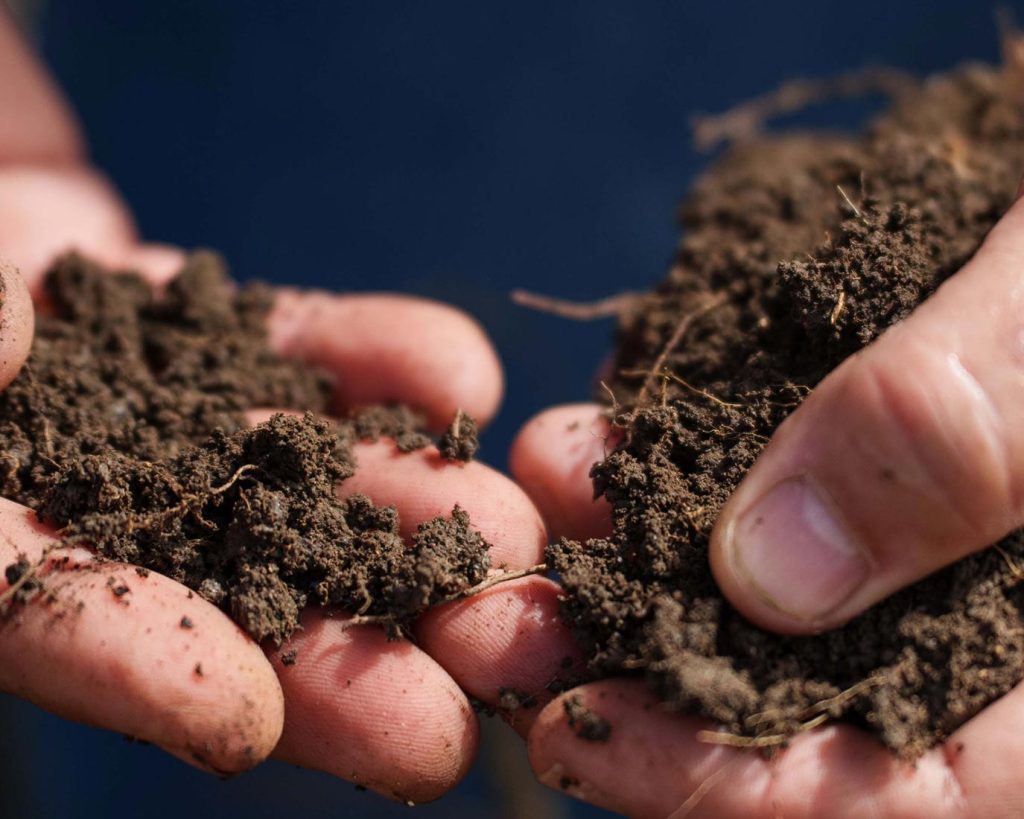
Soil carbon farming practices improve soil health by increasing organic matter content, enhancing soil structure, and promoting microbial activity, leading to better nutrient retention and water infiltration.
Climate Change Mitigation
Carbon farming helps reduce the effects of climate change by sequestering carbon dioxide from the atmosphere, in turn reducing emissions and contributing to the overall effort towards climate change resilience.
Enhanced Biodiversity
Practice changes common in soil carbon farming projects, like improving groundcover, increasing plant diversity, and restoring soil health, create more stable habitats for soil organisms, pollinators, and native species. These regenerative practices support ecological resilience and contribute to broader biodiversity outcomes across agricultural landscapes.
Financial Incentives
Soil carbon farming allows landholders to generate additional income by selling Australian Carbon Credit Units (ACCUs), providing financial incentives for implementing sustainable land management practices. Enhancing soil organic carbon (SOC), improving feed-base, and optimising grazing can deliver both carbon revenue and long-term productivity gains.
Drought Resilience
Soil-focused carbon farming practices, including rotational grazing, stubble retention, and regenerative cropping, increase the soil’s capacity to hold water and withstand dry periods. Improved soil structure and higher organic carbon levels reduce erosion, enhance moisture retention, and help maintain healthier pastures during drought conditions.
CarbonLink Farming Methods
Before starting your carbon farming method, you must adopt an approved method outlining eligibility criteria, project execution, abatement estimation, measurement, and reporting. CarbonLink will work with you to define your project scope and landscape before creating your unique NetImpact Program based on the following.
Soil Carbon
Soil carbon is crucial in fertility, stability, and water retention. Understanding its levels is critical to effective land management.
However, soil carbon measurement can be complex due to variations influenced by soil and plant types. Our scientists ensure accurate assessments with tailored sampling programs, paving the way for sustainable land practices.
Unlock the secrets of soil carbon farming with CarbonLink’s innovative science-based approach.
CarbonLink is Australia’s leading soil carbon farming partner, supporting projects across more than 330,000 hectares. With the nation’s largest portfolio of soil carbon projects by both area and ACCU issuance, we help landholders confidently measure, manage and monetise soil carbon.
Want to know more?
We understand that carbon farming is a big investment so we’ve put together some useful resources to help you figure out if it’s right for you.
"We chose CarbonLink for their credentials as far as experience, they understand the grazing system and their measurement is of the highest standard and therefore we can claim more carbon."
"Soil carbon seems to be the most valuable form of ACCUs. It's the most stable, it's down there deep and it's easily three times more than we make out of livestock. It really has freed us up to dream again and we can start to viably see a future for the next generation."
"A well performing carbon project is a good performing beef business also. We go into droughts slower and come out of them slower. And the opportunity to level out the dips and highs in income is quite reassuring.”
"Working with CarbonLink’s Carbon Farming Advisor has made an enormous difference for our operation. His guidance helped us avoid challenging conditions of limited feed. Having this level of support through both good and adverse seasons means a lot.”
“For me, Carbon Farming is a must in maintaining viability of my property. Carbon farming has taken the pressure off operating Cheyenne during tough conditions and seasons involving extreme weather events. My motivation is to make my farm a healthier, better environment for the next generation.”
“CarbonLink combines rigorous testing with producer-focused innovation to deliver soil carbon projects that are both a practical and profitable solution for Australian producers.”
“CarbonLink is committed to helping farmers unlock the productivity benefits of regenerative agriculture. Our commitment to innovation ensures producers can participate confidently, knowing their efforts contribute to their farm’s long-term viability and resilience for future generations.”