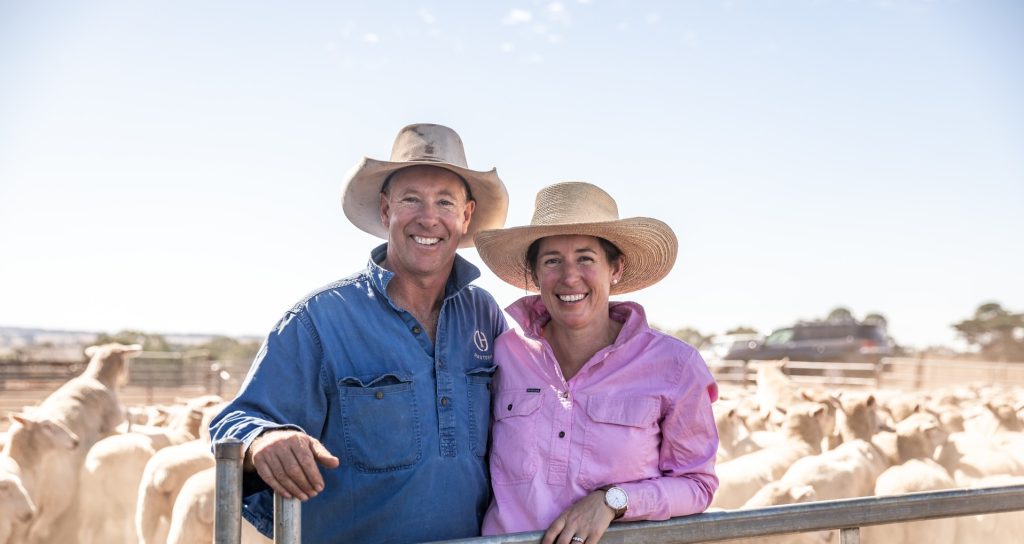

“The release of ACCUs for Bonnie Doone is a huge step toward a greener, more sustainable future for Australian primary producers and landowners.”
Bonnie Doone is a 5,275 hectare grazing property located near Monto in Central Queensland. With a long history of commercial beef production, the enterprise was already focused on maintaining groundcover, improving pasture condition, and managing grazing pressure across a large and variable landscape.
In 2016, Grant and Carly Burnham from Bonnie Doone partnered with CarbonLink to initiate a soil carbon project, recognising an opportunity to formally measure and verify the outcomes of their land management approach. By adopting regenerative grazing practices, including strategic stocking, pasture rest and maintaining year‑round ground cover, Bonnie Doone was well positioned to increase soil organic carbon while supporting on-farm productivity and resilience.
The soil carbon project provided a pathway to capture carbon from the atmosphere and store it in the soil, converting good land stewardship into verified Australian Carbon Credit Units (ACCUs). For Bonnie Doone, the opportunity lay in aligning profitable grazing with long‑term soil health, emissions reduction, and a diversified income stream, demonstrating how large‑scale grazing enterprises can participate meaningfully in Australia’s carbon market.




Focusing on optimising grazing management across a large‑scale enterprise, CarbonLink worked with the Bonnie Doone team to transition the property to a time‑controlled grazing system. This was supported by a strategic subdivision of the property, increasing paddock numbers from approximately 30 to more than 60, alongside the installation of 40 additional water points to improve livestock distribution and utilisation of pasture.
These changes enabled longer rest periods for pastures, allowing plants to recover fully between grazing events, build deeper root systems, and maintain higher levels of groundcover throughout the year. Increased rest and improved stock control played a critical role in enhancing soil structure, water infiltration, and organic matter accumulation. Together, these practice changes supported increased soil carbon sequestration while strengthening pasture resilience and sustaining productive grazing outcomes across Bonnie Doone’s variable seasonal conditions.
“I think we're in a really blessed position to be food producers and land custodians. We can actually be part of the movement to help the climate through red meat production."
Operating at scale, Bonnie Doone required a grazing system that balanced productivity with long‑term land condition and climate variability. The program focused on improving control over grazing pressure, ensuring adequate groundcover, and allowing sufficient recovery time for pastures to regenerate between grazing events.
Key goals included increasing rest periods to match pasture growth rates, improving livestock distribution through subdivision and water access, and reducing the risk of overgrazing by shifting to time‑controlled grazing. By managing grazing intensity and duration, the program aimed to maintain soil cover, support deeper root development, and improve overall pasture resilience.
Through time‑controlled grazing and strategic rest, Bonnie Doone sought to optimise pasture utilisation while enhancing soil function and creating the conditions required for sustained soil carbon sequestration. This approach enabled the property to protect its resource base, adapt to seasonal variability, and align productive grazing with long‑term environmental and commercial outcomes.