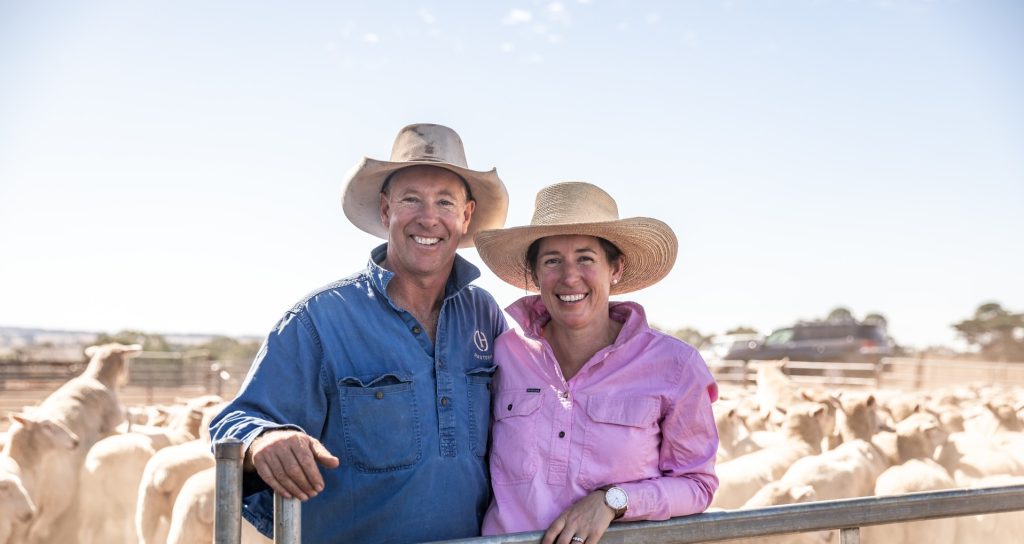

“We don’t manage for carbon necessarily, the grazing system we are in is for productivity and increased carrying capacity, increased biodiversity and ecological health.”
Tom and Antoinette Archer operate Archer Pastoral, a large‑scale grazing enterprise, located near Goondiwindi in southern Queensland. With more than two decades of regenerative land management behind them, the Archers were early adopters of soil carbon farming, registering one of Australia’s first at‑scale grazing soil carbon projects.
Their commitment began with a focus on improving land and business health. This naturally led to a deep dive into soil carbon, aiming to enhance soil health and create a more sustainable income stream.
Their soil carbon journey reflects a management‑first philosophy, prioritising soil health, biodiversity, and business resilience, with carbon outcomes measured as a consequence, not the driver, of good grazing management.





The Turpentine soil carbon project at Archer Pastoral was built on a foundation of long‑term regenerative grazing management, supported by education and consulting through Resource Consulting Services (RCS) and implemented well before the commencement of carbon measurement.
The soil carbon project plan proposed to improve land health and soil biology, focusing on ecological sustainability. These changes were designed to reduce bare ground, enhance soil biology, improve rainfall infiltration, and build soil carbon at depth for long‑term permanence.
The Land Management Strategy (LMS) for the project nominated the following practice changes:


The Archers adopted soil carbon farming to support and strengthen their existing grazing system, rather than replace it. The programme objectives were to:
Carbon credits were viewed as a natural outcome of managing for soil, plants, and animals – reinforcing the value of management decisions that already elevated land and business performance.
In the first sampling period, Turpentine soil carbon project sequestered 91,377 tonnes of CO2 equivalent, earning 66,050 ACCUs (equivalent to 4.6 ACCUs per hectare per year) after accounting for all project emissions and discounts. Furthermore, Archer Pastoral achieved productivity benefits including improved carrying capacity and pasture utilisation, as well as enhanced pasture composition with the return of desirable perennial species. Sequestration of Soil Carbon supported increased water infiltration and reduced runoff, keeping topsoil on‑farm. Archer Pastoral also maintained groundcover through drought periods, including the 2018–19 drought, supporting faster landscape recovery compared with historical condition and surrounding systems.