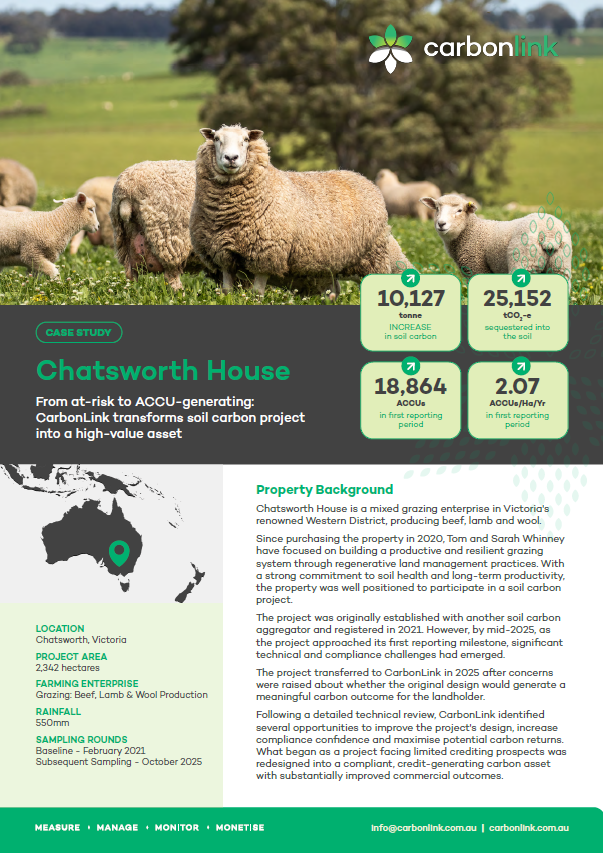
Chatsworth House records more than 25,000 tonnes of CO2-e sequestered following technical project review and measurement, rewarding land management improvements being made to property.
A Victorian grazing family has successfully generated 18,864 Australian Carbon Credit Units (ACCUs), from its soil carbon project following a technical review by CarbonLink ahead of the project’s first reporting period.
The result makes Chatsworth House the highest ACCU-earning soil carbon project in Victoria, marking an important achievement for both the Whinneys and the region.
Tom and Sarah Whinney run Chatsworth House, a beef, lamb and wool enterprise in Victoria’s Western District. The project recorded a 10,127 tonne increase in measured soil carbon (tC) over its first five-year reporting period. After project emissions were accounted for, this was equivalent to 25,152 tonnes of carbon dioxide equivalent (CO2-e) sequestered into the soil.
The project was originally registered with another provider in 2021. By 2025, as it approached its first reporting milestone, the Whinneys had some concerns about how the project was being managed and were uncertain about whether it would generate ACCUs in the upcoming reporting period.
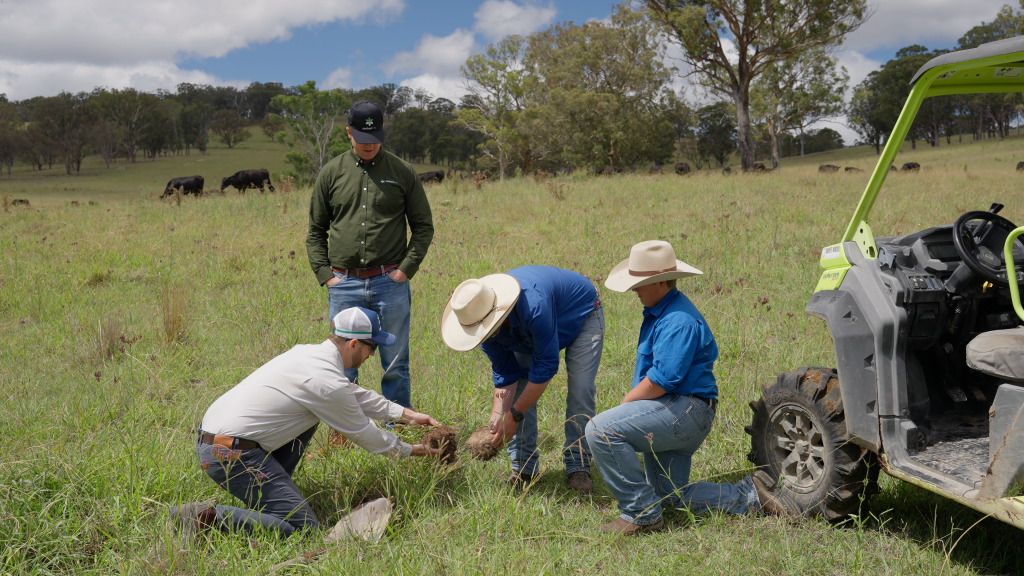
The Whinneys transferred the project to CarbonLink, whose team undertook a comprehensive technical review, bringing expertise in soil sampling design, project reporting calculations and soil carbon measurement technology.
The review identified limitations in the project’s original baseline measurement that had not previously been known to the Whinneys. Because the baseline establishes the starting point against which soil carbon stock change is measured throughout the life of a project, its accuracy and integrity are critical.
CarbonLink developed a measurement and reporting approach that worked within the constraints of the established baseline while accurately representing the soil carbon change that could be measured across the project.
“When CarbonLink came on board, we wanted greater certainty around where the project stood and what we could expect from upcoming sampling events. They took a fresh look at the project and identified opportunities that had been missed. They went back through the project in detail, explained what they found and gave us confidence in the approach going forward,” Tom and Sarah Whinney.
Working within the project’s original baseline
CarbonLink’s review found that the project’s baseline sampling approach placed limitations on the options available for subsequent measurement.
After assessing the baseline alongside soil types present across the property, CarbonLink determined the most appropriate approach to ensure measurement integrity, whilst optimising Carbon Estimation Areas (CEAs) and stratification to enable the project to progress successfully.
CarbonLink Project Manager Santos Amadeo said the project demonstrated why baseline measurement is one of the most important foundations of a soil carbon project.
“The baseline stays with a soil carbon project throughout its life, so getting that initial measurement right is incredibly important. When we reviewed the Chatsworth House project, we identified limitations in the original baseline that restricted some of the options available to us. If we had been involved at the beginning, we would have had greater flexibility in how the soil profile was measured.”
“Our job from the point of coming onboard was to work with the baseline that was already established and apply our sampling, measurement and reporting expertise to determine the most robust pathway forward,” Santos Amadeo.
While the baseline remains with the project throughout its life, subsequent sampling rounds provide opportunities to strengthen the measurement approach. CarbonLink’s expertise lies in identifying those opportunities and applying robust sampling and measurement methodologies to deliver the strongest possible data and project outcomes for landholders.
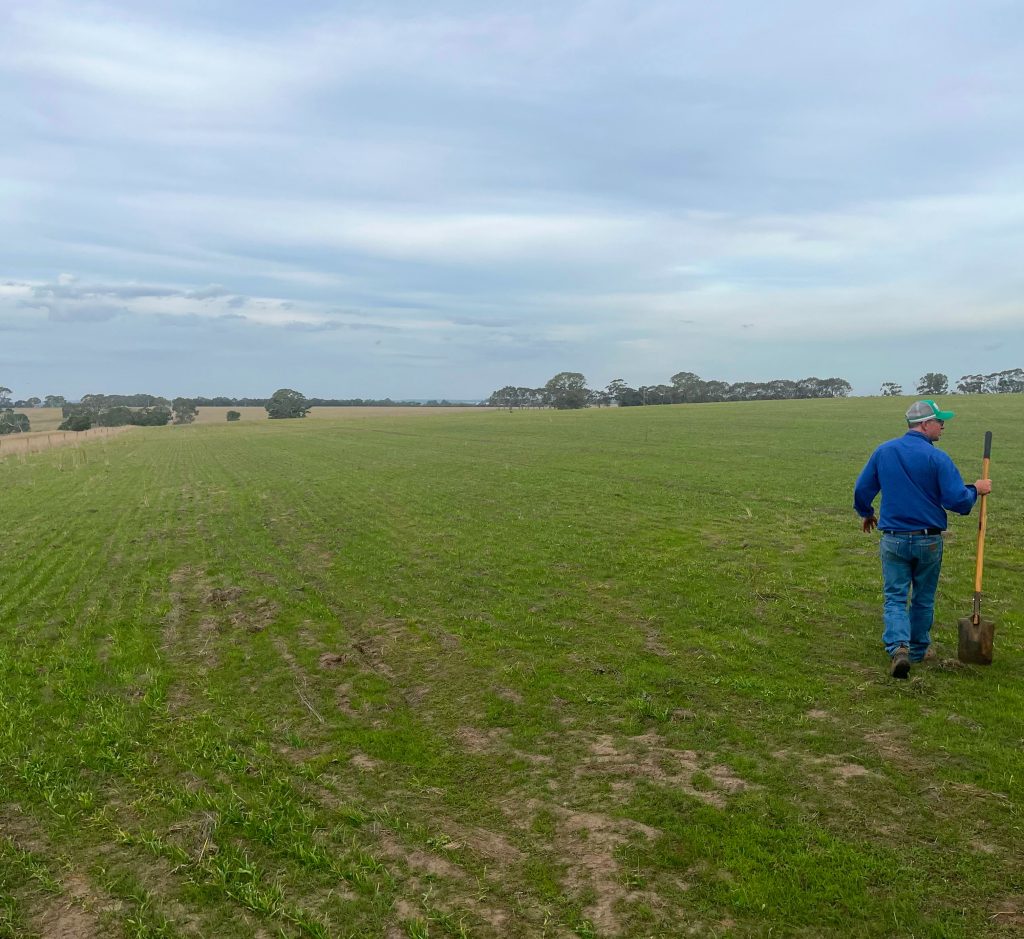
Practical changes focused on healthier soils and pastures
Increasing soil organic carbon, improving soil fertility and building greater resilience were already important priorities for Sarah & Tom Whinney at Chatsworth House.
Establishing a soil carbon project provided an opportunity to capitalise on these existing goals, while creating an additional source of value from the regenerative management practices being implemented across the property.
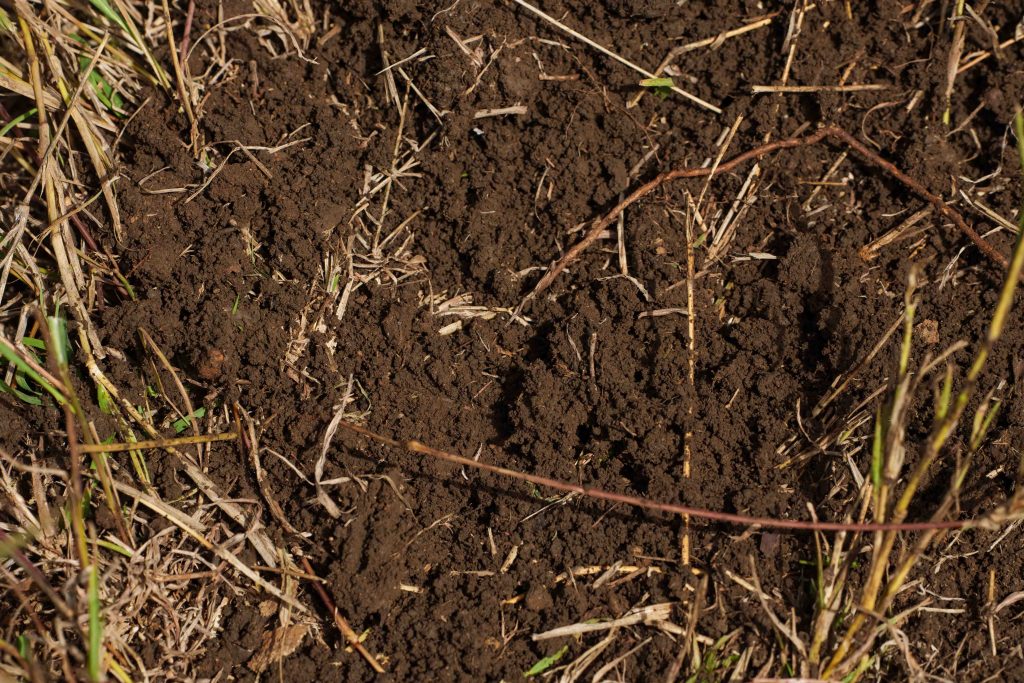
As part of the project, compost and other nutrients were applied to address nutrient limitations. Pasture renovation, re-seeding, legumes and changes to grazing management also supported soil fertility, pasture growth and the long-term resilience of the grazing business.
The combination of practical management changes on farm and rigorous measurement enabled the project to demonstrate measurable soil carbon gains during its first reporting period.
Careful project design matters, particularly because a soil carbon project needs to reflect the conditions of an individual property.
“Chatsworth House shows how important it is to look closely at the property, the soil and the way the land is being managed. By improving the sampling approach and the calculations behind the project, we were able to help Tom and Sarah achieve a result that better reflected what was happening on the ground,” Santos Amadeo.
“CarbonLink’s technical expertise transformed the project’s outlook and created significant additional value that we feel otherwise would not have been realised,” Tom and Sarah Whinney.
Measured results from the first reporting period
The project generated 18,864 ACCUs, equivalent to 2.07 ACCUs per hectare per year, across its first reporting period.
CarbonLink Chief Executive Officer, Chris McCosker said result reflected the value of combining the work farmers do on the land with high-integrity measurement and diligent project management.
“Tom and Sarah have put soil health and the long-term performance of their property at the centre of their management. Our role was to make sure the project was designed and managed in a way that properly recognised those efforts,” Mr McCosker said.
“Soil carbon projects are long-term undertakings. They need practical farm management, reliable measurement and ongoing attention to compliance requirements. Chatsworth House is a strong example of farmers and technical specialists working together to get a project back on track and performing.”
Congratulations to the Whinneys on a significant result for Chatsworth House and a new benchmark for soil carbon projects in Victoria.
For more information about the Chatsworth House soil carbon project, view the full Case Study.