CarbonLink’s successful application of model-assisted measurement supports latest round of high-integrity ACCUs issued to Walcha-based soil carbon project.
A NSW beef producer, in partnership with carbon farming service provider, CarbonLink, has achieved a significant milestone in regenerative farming, with Cheyenne Pastoral recently issued a substantial number of Australian Carbon Credit Units (ACCUs) by the Federal Government’s Clean Energy Regulator.
Located at Walcha, in the New England region of NSW, the 759-hectare beef cattle operation has successfully employed several regenerative farming practices, including time-controlled grazing and biological soil amendments, to achieve significant carbon sequestration equivalent to a 10,494-tonne increase in soil organic carbon, generating 28,859 ACCUs to-date.

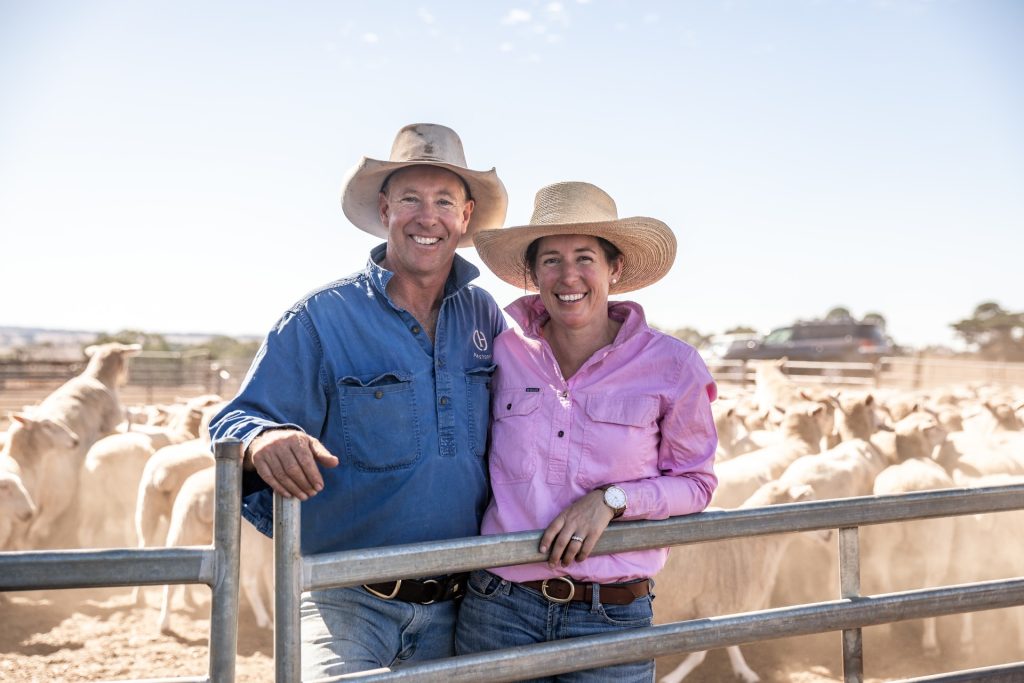
Walcha property, Cheyenne Pastoral, have secured a second round of 16,373 ACCUs. Pictured: Nick Blomfield (left) and Hugo Blomfield (right).
Cheyenne Pastoral owner, Nick Blomfield, says soil carbon farming has not only provided significant environmental benefits, but also improved the operation’s financial position.
“For me, Carbon Farming is a must in maintaining viability of my property,” he said. “This soil carbon project has taken the pressure off operating Cheyenne during tough conditions and we’ve been able to survive extreme weather events, including three major droughts.”
By integrating soil carbon farming into the grazing enterprise over the 8-year project to-date, Cheyenne Pastoral has been able to diversify its income stream.
Carbon farming enabled Cheyenne Pastoral to generate 12,486 ACCUs following its T1 sampling round undertaken in 2021, which was achieved over a five-year period. Another 16,373 ACCUs have now been generated through carbon sequestration efforts, showing accelerated results across a three-year period.

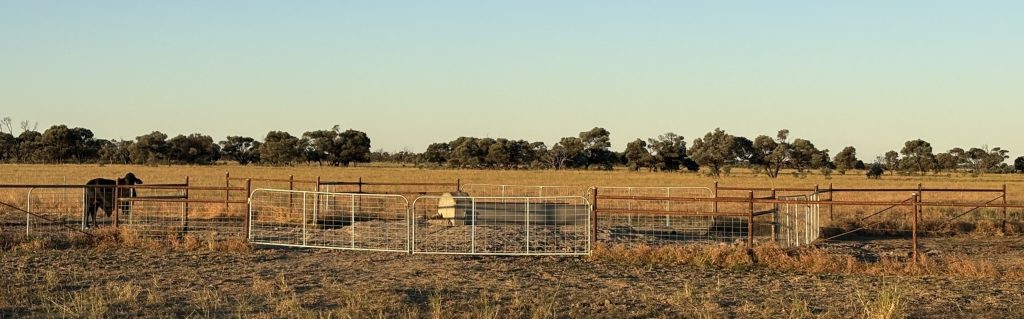
Paddock rotation at Cheyenne Pastoral in February 2026.
Mr Blomfield has been in partnership with CarbonLink since 2016, undertaking several regenerative land management activities to support carbon sequestration, including the strategic subdivision of paddocks and the installation of additional water points to improve pasture utilisation and ground cover. Soil health has also been further supported through the application of biological inputs including chicken manure, rock phosphate and liquid plant food.
As a soil carbon project partner, CarbonLink uses a proprietary measurement platform built on more than 15 years of research and innovation in soil science. Unlike many providers who rely heavily on generic models or limited sampling, CarbonLink combines high-resolution measurement with advanced predictive modelling that’s tailored to Australian conditions.
“Cheyenne’s success demonstrates that soil carbon farming can be both scientifically robust and economically viable,” said CarbonLink’s Chief Executive Officer, Chris McCosker.
“By combining rigorous testing with producer-focused innovation, this project proves that soil carbon can be a practical and profitable solution for Australian producers.”

CarbonLink have partnered with Cheyenne Pastoral since 2016. Pitcured: Head of Innovation, Hugh Armitage (left), and Project Manager, Adam Houlden (right).
The project has also seen CarbonLink pioneer its first successful application of the ACCU Scheme’s model-assisted measurement approach for soil carbon. Legislated under the Federal Government’s Carbon Credits (Carbon Farming Initiative) Act 2011, the model-assisted approach combines ground-truth data and scientifically validated models allowing for improved accuracy and cost-efficiency in soil carbon measurement.
Professor Jason Rowntree, Director of MSU Centre for Regenerative Agriculture, who conducted an independent review of the latest sampling round at Cheyenne, says early results indicate measurable improvements in soil carbon stocks.
“This appears consistent with the property’s strong grazing management and ecological condition,” he said. “Particularly intriguing are the measured increases below the 30-centimeter depth, as few long-term studies have examined soil carbon change at that scale.”

Nick Blomfield hosting Professor Jason Rowntree and CarbonLink at Cheyenne Pastoral property in November 2025.
As a result of diversification into carbon farming. Cheyenne Pastoral has eliminated the use of synthetic fertilizers, reduced operational input costs and strengthened generational continuity.
“My motivation is to make my farm a healthier, better environment for the next generation,” said Mr Blomfield.
“I’ve experienced first-hand that carbon farming has the potential to help lift small producers like us out of debt. A number of years ago I sat down with my son, Hugo, and explained that unless we commit to soil carbon farming, we would likely need to walk away from our farm. As a successor of the property, the decision needed to be made by us both. We agreed to give it a go and here we are today.”
Dr Terry McCosker OAM, Executive Director and Founder at CarbonLink, said the company is committed to helping farmers like Nick Blomfield from Cheyenne Pastoral unlock the productivity and financial benefits of regenerative agriculture.
“Our commitment to innovation is empowering Australian producers to participate confidently, knowing their efforts are contributing to their farm’s long-term viability and resilience for future generations,” he explained.

The Cheyenne Pastoral soil carbon project has seen up to 95% faster land recovery and 81% higher pasture biomass than neighbouring grazier properties.
About CarbonLink
CarbonLink is a leading Australian carbon farming and sequestration project provider with 18 years’ experience supporting farmers to unlock the value of soil carbon. With deep expertise across the Soil Carbon Method, CarbonLink provides end-to-end, tailored solutions—backed by in-house research and development, GIS specialists, advisory services and project management—to improve farm productivity, business viability and environmental outcomes.
Following a decade of significant investment in science and technology, including collaborative IP development with CSIRO, CarbonLink now manages 71 soil carbon projects nationwide, measuring more than 340,000 hectares and expected to generate approximately 15 million ACCUs over their project life.